$36.43
$63.39
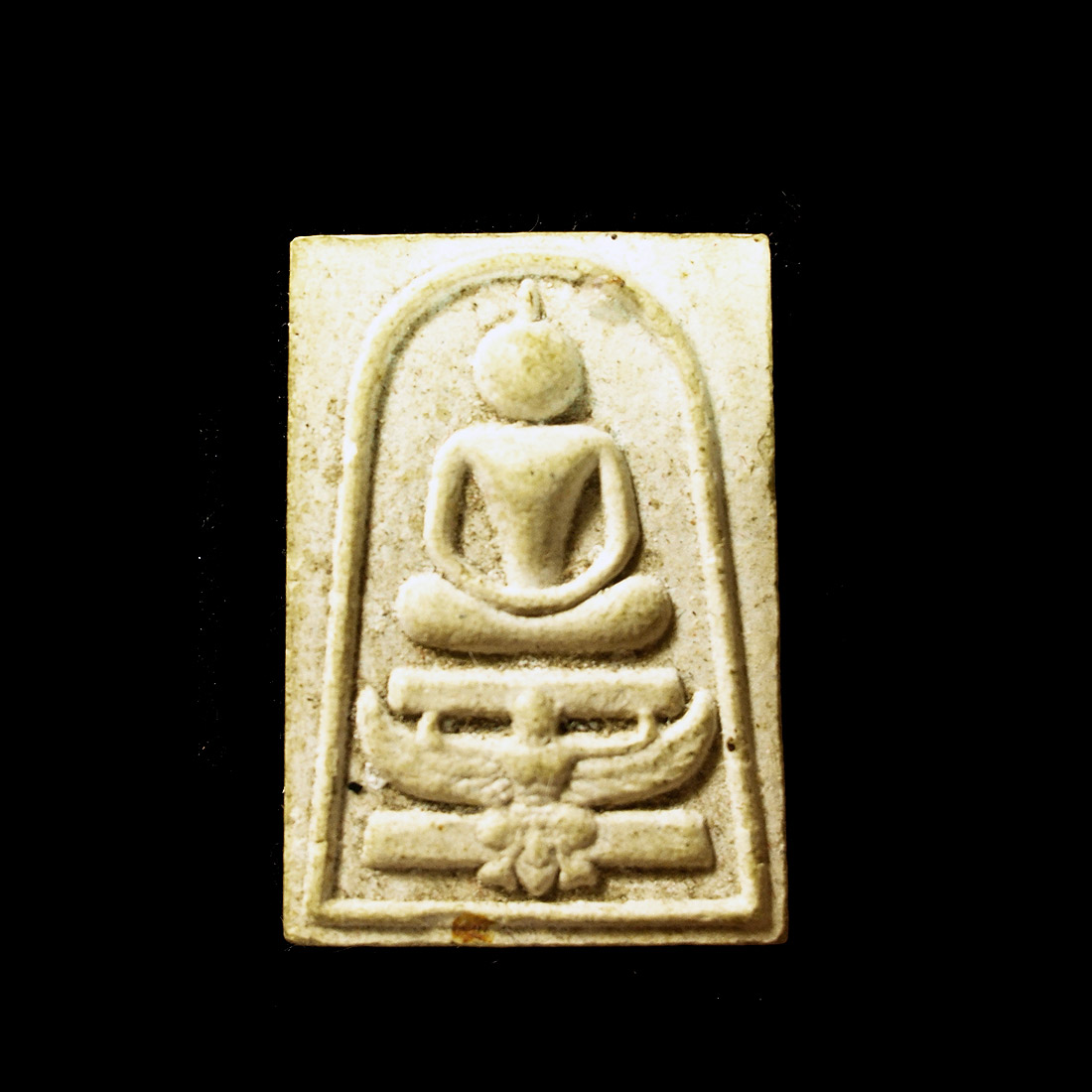
SKU: BA234D4 Categories: Before BE 2525, Pra Somdej Brand: d4, Somdej Description Additional information Description Phra Somdej of Luang Pu Toh A Sacred Early Amulet of Profound Lineage and Power Among the earliest and most historically significant amulets created by Luang Pu Toh of Wat Pradu Chimphli, the Phra Somdej made from ancient sacred powder with a distinctive betel nut residue coloration stands as a highly revered and universally recognized masterpiece. Documented clearly in authoritative texts on Luang Pu Toh and Wat Pradu Chimphli, this amulet is regarded as one of his earliest creations and is treasured for both its authenticity and its exceptional spiritual potency. Origin of the Molds The lineage of this amulet begins with Luang Pho Klai of Wat Hong, who provided Luang Pu Toh with the original front mold used to create the Buddha image. The image itself is widely praised for its refined proportions, serene expression, and excellent state of preservation—hallmarks of early Phra Somdej workmanship. Later, Luang Pu Toh instructed a skilled craftsman to carve a new rear mold, distinguished by a teardrop-shaped yantra on the back. This combination of an inherited front mold and a newly created rear mold resulted in a unique and historically traceable early Somdej amulet. Once completed, these amulets were distributed directly to Luang Pu Toh’s disciples. Sacred Materials and the First Powder Formula This first batch of Phra Somdej amulets was created using an exceptionally important sacred powder—considered the foundation powder from which all others were derived. During a period when Luang Pu Toh frequently undertook ascetic pilgrimages, he once traveled together with Luang Pho Sod of Wat Pak Nam Phasi Charoen, as well as another monk whose identity has since been lost to time. Upon returning to Wat Pradu Chimphli, the monks compared the spiritual knowledge and practices they had each attained and found their results to be aligned. They then agreed to formally record the formula for this sacred powder. The process was meticulous and uncompromising: White clay was dissolved in holy water and formed into chalk-like sticks. Ivy leaves were crushed, and their juice was applied to the sticks to prevent adhesion to the hands. Sacred characters and yantras—Pathamang, Trisanghe, Itthije, and Maharach—were written continuously, day after day. Not a single day could be skipped; if interrupted, the powder had to be gathered and the process restarted from the beginning. Once the inscriptions were completed, each monk divided his powder into three portions, exchanging them so that all powders were fully integrated. The final mixture was finely textured, slightly white in color, and renowned for its exceptional power in metta (compassion), charisma, and spiritual authority. This sacred substance became known among disciples as “Ittije Powder.” Additional Sacred Ingredients The bulk of the powder mixture consisted of fragments from Wat Phlab, including broken and damaged ancient amulets discovered when the temple’s old cache was unearthed. To this was added a small but highly significant quantity of powder from Phra Somdej amulets of Wat Rakhang, Thonburi, contributed by a lay supporter living near the temple. This blending of revered lineages further elevated the spiritual stature of the amulet. Immersion in Holy Water and Color Variations Luang Pu Toh employed a distinctive consecration method by immersing the amulets in holy water contained in dragon-shaped jars throughout the entire Buddhist Lent. These jars varied in size, and some also contained soil or sand. When devotees offered fresh flower garlands, Luang Pu would place them directly into the holy water jars, allowing their natural essences to infuse the water. Throughout Lent, Luang Pu Toh continuously prayed over and consecrated the amulets. This prolonged immersion is the reason these Somdej amulets display a wide range of natural coloration. Some show lighter, whitish stains from clearer holy water, while others bear thick, rust-brown or betel nut–like residues formed from older jars where sacred sediments had accumulated over many years. These variations are a key identifying feature of genuine early amulets. After the end of Lent, the amulets were removed and distributed. If left immersed too long, they would naturally adhere together in clusters. Early Production and the Thirteen Somdej Types Historically, Luang Pu Toh’s earliest amulet production consisted of thirteen distinct Somdej designs, including: Three-tiered Somdej with a table-leg base Seven-tiered Somdej Three-tiered Somdej with lotus-shaped ear-like bases Luang Pu Toh created all thirteen types with deliberate intent, seeking to imbue them with the highest possible spiritual power. He personally gathered auspicious materials and, whenever time allowed, pressed the molds by hand, working calmly, joyfully, and with deep loving-kindness. He rotated freely among all thirteen molds, never fixing quantities or maintaining production records. He only stated that he began making amulets in his early thirties. Monks, novices, and lay supporters from Wat Phlab (Bangkok Yai) assisted him from the very beginning, offering advice on materials, mixtures, and methods, and helping carve the earliest molds. When asked later who carved the molds for the thirteen designs, Luang Pu Toh simply replied that too much time had passed for him to remember clearly. Spiritual Reputation and Value The betel nut residue Phra Somdej is universally acknowledged as an authentic early amulet of Luang Pu Toh. Its spiritual reputation is firmly established, with countless accounts attributing to it powerful blessings of compassion, personal magnetism, protection, and success in business. Despite its comparatively modest appearance, its spiritual efficacy is said to rival that of Luang Pu Toh’s most famous amulets—many of which now command prices in the hundreds of thousands or even millions of baht. As one of Luang Pu Toh’s earliest creations, this amulet embodies not only sacred materials and meticulous ritual practice, but also the purity of intention and spiritual depth of a master at the beginning of his legendary path. Additional information Temple Wat Praduchimplee Monk LP Toh Date BE2468
Pra Somdej